
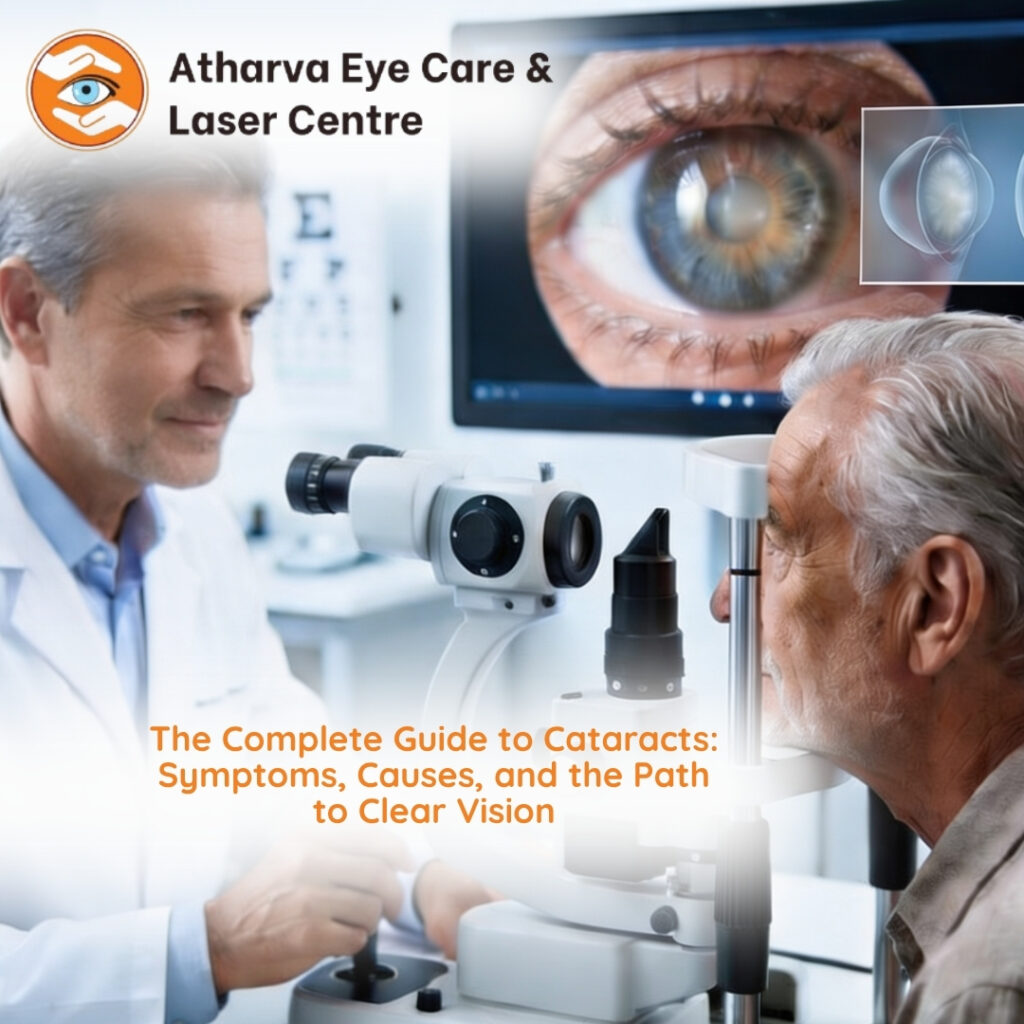
The Complete Guide to Cataracts: Symptoms, Causes, and the Path to Clear Vision
Have you noticed the world looking a little hazy lately? Maybe road signs are harder to read at night, or you find yourself frequently updating your eyeglass prescription, yet the fog never fully clears.
These are classic signs of a cataract (known as Motibindu). Because cataracts develop slowly over several years, many people don’t realize their sight is slipping. Understanding how cataracts form and recognizing the warning signs can help you protect your vision and maintain your independence.
What is a Cataract and How Does It Form?
To understand a cataract, think of your eye like a camera. Right behind your pupil sits a clear structural window called the natural lens. In a healthy eye, this lens is perfectly transparent, focusing light cleanly onto the retina at the back of the eye to create a sharp picture.
A cataract occurs when this clear lens becomes cloudy or opaque.
Crucial Fact: A cataract is not a layer of skin growing over the outside of your eye. It is a structural, chemical change happening entirely inside the eye’s natural lens.
From birth, the lens is composed of water and specialized proteins arranged in a precise pattern that keeps it clear. As we cross the age of 50, these protein fibers naturally begin to break down and clump together. Over time, these microscopic clumps expand, blocking and scattering light. This acts like a frosted window, making images appear blurry, dull, and distorted.
While aging is the primary driver, cataracts can develop earlier or progress faster due to:
-
Systemic Conditions: Uncontrolled diabetes accelerates protein damage in the lens.
-
Ocular Trauma: Past physical injuries or blows to the eye can cause early clouding.
-
Medications: Prolonged, chronic use of steroid medications can trigger cataract growth.
-
Lifestyle: Smoking and unprotected exposure to solar ultraviolet (UV) rays hasten tissue degradation.
Recognizing the Signs: Early vs. Advanced
Because cataracts creep up gradually, tracking your symptoms helps you seek clinical care before your daily routines are severely disrupted.
Early-Stage Warning Signs
In the beginning, cloudiness may affect only a tiny spot on the lens, causing subtle shifts:
-
Frequent Prescription Changes: You constantly need new glasses, but the visual clarity quickly fades because the underlying lens structure is shifting.
-
Sudden Near-Vision Improvement: As the lens hardens and swells early on, it can temporarily boost close-up focus. You might suddenly read without reading glasses, but this “second sight” is temporary.
-
Mild Haze: Text on mobile screens or newspapers begins to look soft or smudged.
Advanced-Stage Symptoms
Left unmanaged, a cataract eventually disrupts your safety and independence:
-
Severe Night Glare and Halos: At night, your pupil opens wide to let in light, exposing more of the cloudy lens. Incoming headlamps scatter violently inside the eye, creating blinding glare and circular rings (halos) around light sources, making driving highly dangerous.
-
The “Foggy Window” Effect: Your vision constantly feels as though you are looking through a dense cloud of smoke or a dirty piece of plastic.
-
Faded Colors: The clouded lens acts like a yellow or brown filter, making vibrant colors look dull, muddy, or washed-out.
Treatment: Separating Myth from Fact
There is a widespread misconception that eye drops or home remedies can dissolve a cataract.
The Medical Reality: There is absolutely no medicine or eye drop that can reverse a cataract. Once lens proteins clump together, surgery is the only effective, permanent treatment.
Fortunately, modern cataract surgery is one of the safest and most successful outpatient procedures in the world. You no longer have to wait for a cataract to “ripen” or turn completely blind. The ideal time for surgery is whenever the cloudiness begins to interfere with your daily life, hobbies, or driving safety.
During a brief, painless procedure, a surgeon uses ultrasound to gently break up and remove the cloudy natural lens. It is replaced with a permanent, clear artificial lens called an Intraocular Lens (IOL). This new lens lasts a lifetime, can never develop a cataract, and can even correct pre-existing nearsightedness or astigmatism.
If you are above the age of 50, scheduling a comprehensive annual eye checkup is your best defense. Regular testing allows an eye specialist to monitor lens changes and help you step back into a clear, bright world.
